Shirt Stories: Chris Waddle and 5 Minutes That Changed Football
已于2026年6月8日发布

Words by Oscar O'Connor
Witnessing the Hand of God
As the old cliché goes, football is a game of two halves. For every legendary moment of glory that gets written into the history books, there’s an equal and opposite force of heartbreak.
The 1986 quarter-final between England and Argentina remains one of the most spectacular afternoons in the history of the game, but for half of the players involved, it’s not a happy memory.
It was a match that had everything, featuring both the finest goal ever scored in the finals, and arguably the most infamous goal scored in any football match. It also featured a generational dribbling talent who wasn’t Diego Maradona. Enter Chris Waddle…
This shirt will be displayed as part of The MWS Legend Collection NYC exhibition, a celebration of football history told through some of the game’s most iconic shirts and unforgettable moments.
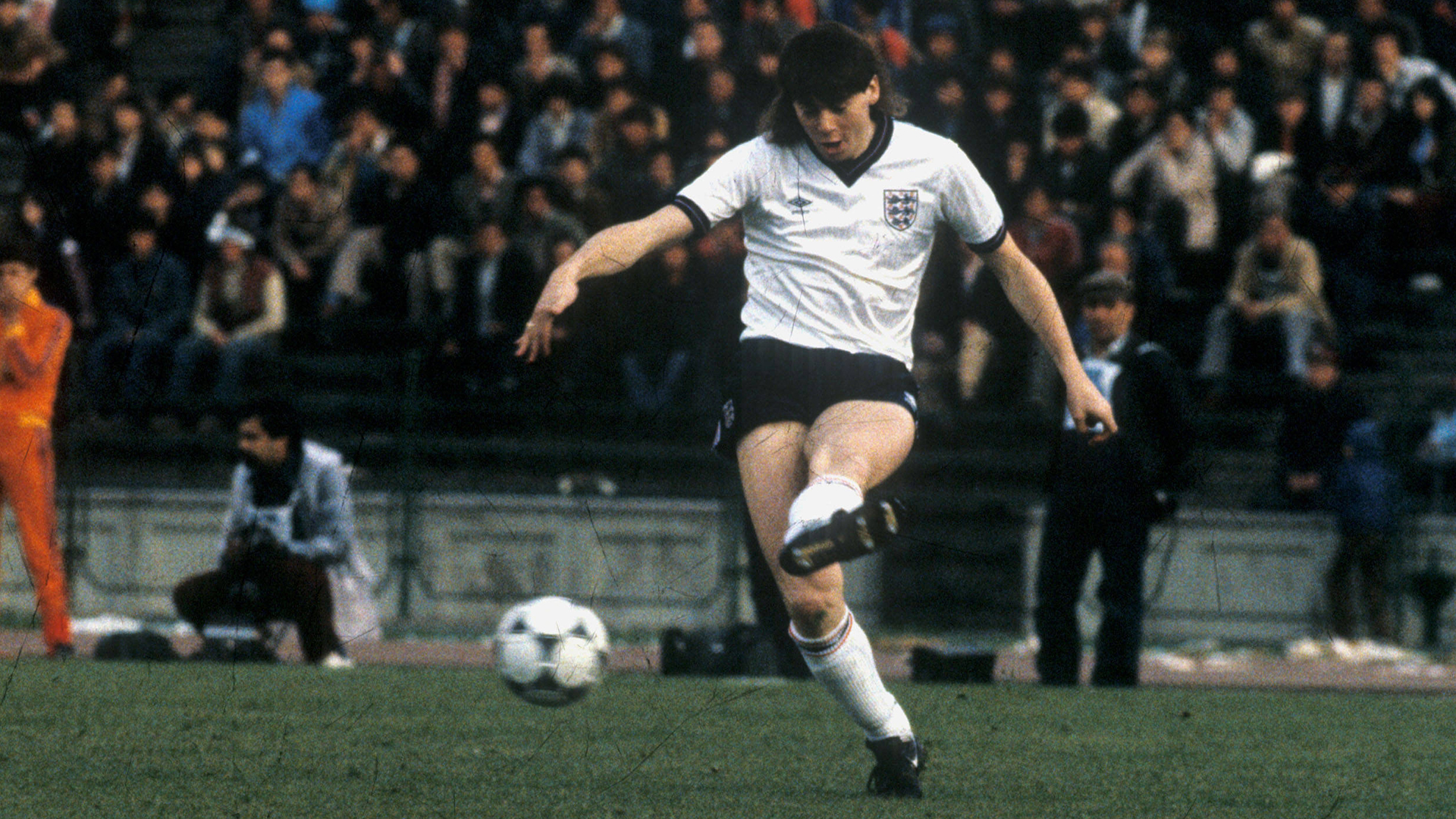
Waddle was a game-changer for the Three Lions
The stage for this unforgettable encounter could hardly have been bigger. More than 114,000 spectators packed into Mexico City's colossal Estadio Azteca, creating a wall of noise beneath the blazing Mexican sun. Sitting over 2,200 metres above sea level, the stadium’s altitude presented its own challenge to players already bearing the pressure of a tournament quarter-final.
Of course, this was the match in which Maradona famously went from the ridiculous to the sublime in the space of five minutes, scoring his notorious ‘Hand of God’ goal, before carving his way through the entire England midfield and defence to score what would become universally known as the ‘Goal of the Century’.
With roughly 21 minutes of regulation time remaining and his team trailing 2-0, England manager Bobby Robson turned to his bench and brought on England’s own mazy winger, Chris Waddle.
As a pirouetting flair player who was best known for his ability to weave around defenders, Waddle had just seen the greatest-ever solo goal scored against his own team, which must have been painful on multiple levels. Waddle was brought on as a sub to try and stem the tide of history, opposite a team featuring an unplayable, prime Maradona. No pressure then...
The Moment
Sporting England's number 11 shirt, and a haircut that might accurately be described as "the Mullet of God", Chris Waddle brought width and invention to England's right flank, while the marauding John Barnes was introduced on the left in a twin-pronged attacking gamble that threw caution to the wind.
With two of England's brightest young attacking talents now on the pitch, the momentum in the game began to shift.
Waddle made a typical nuisance of himself drifting in off the right wing, stretching the play for England and pulling the Argentine defence out of position. England poured forward with sustained pressure, and with less than 10 minutes to go, Barnes jinked his way past two defenders and delivered a perfect cross into the box. Waddle peeled away to the unguarded back post, but before the ball could drop to his feet, his prolific teammate Gary Lineker rose to meet the ball with his head, and nodded in his sixth goal of the tournament.
Suddenly, belief returned. What had seemed an impossible task only moments earlier now felt achievable. England sensed vulnerability. Argentina sensed danger. Every attack carried the possibility of an equaliser, every clearance was met with a roar from the crowd, and every second seemed to pass more quickly than the last.
A frantic, nail-biting conclusion to the game ensued, but ultimately for England, and for Waddle, the match would end in heartbreak, after just daring to hope. Maradona’s Argentina would go on to win the tournament outright, cementing their legacy as one of the all-time great international sides.
Hope and Glory
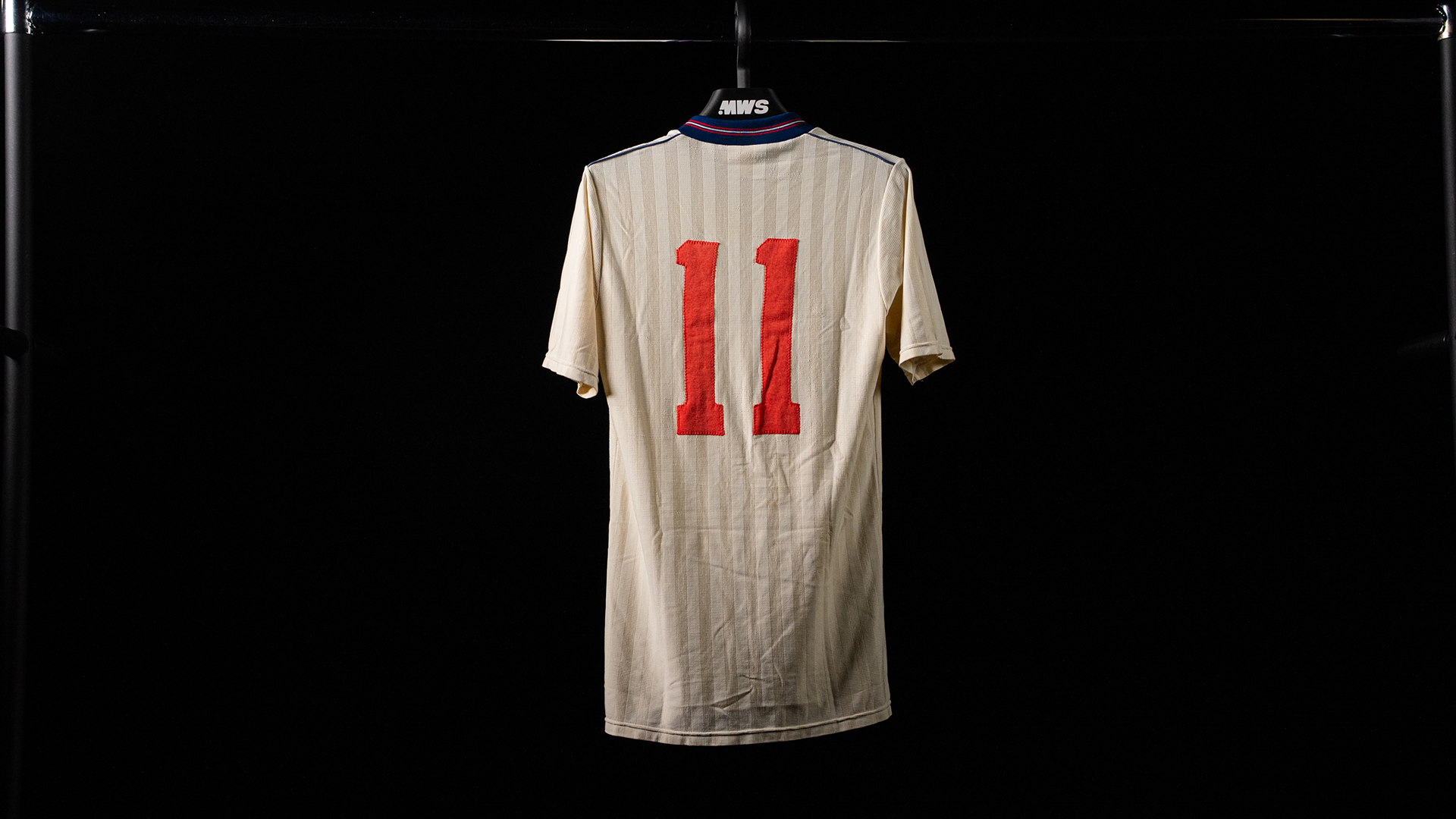
The England shirt worn by Waddle that afternoon perfectly captures a bygone era of international football, and the timeless tale of football’s cruel, two-sided coin. Manufactured long before the age of ultra-light performance fabrics and ventilation panels, it belonged to a generation of football shirts (and players!) built to endure the physical demands of the game. But it's the emotional memories stored in this shirt’s stitching that every era of footballer could relate to.
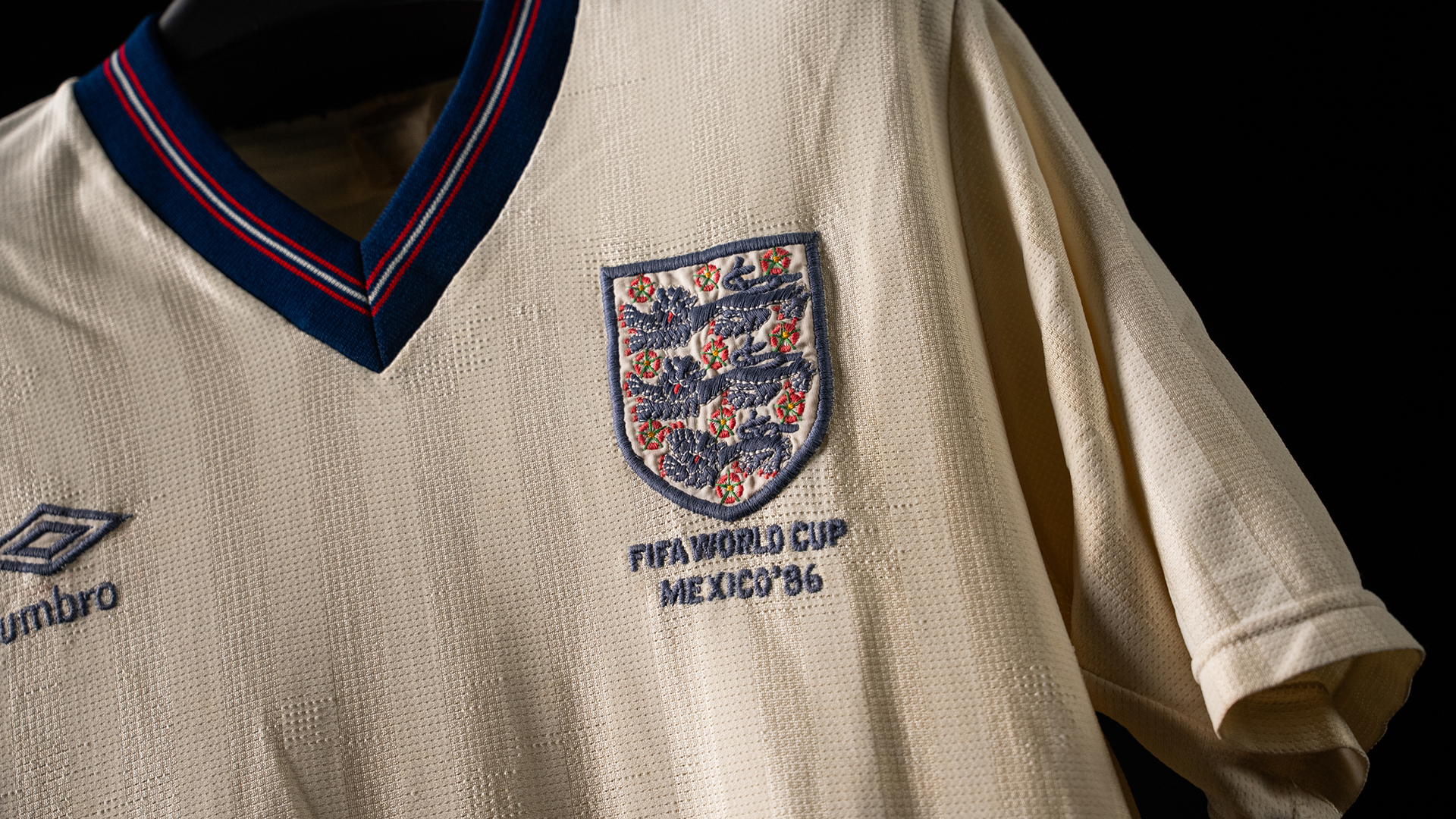
This classic white 1980s shirt, emblazoned with a large Three Lions crest remains one of the most recognisable World Cup shirts ever produced, and is a tangible link to a tournament that helped define football's modern mythology.
Nearly four decades later, the drama of Mexico City still resonates with supporters around the world, and this shirt remains a direct connection to the moments of thrill, hope and agony that will never be forgotten.


